New Anti-Fraud Units Raise the Documentation Bar
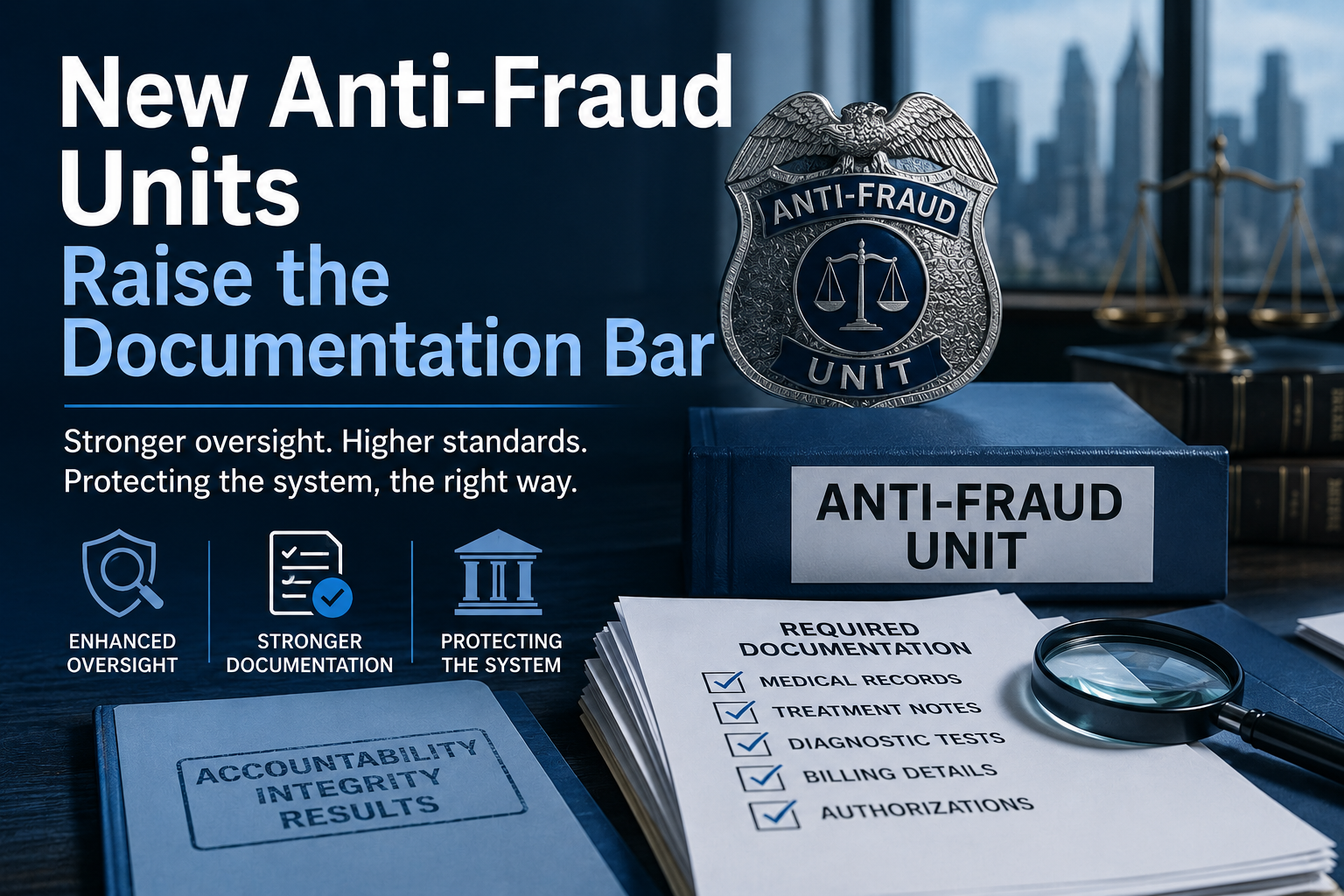
New York's newly created district-attorney anti-fraud units are aimed at the medical mills and staged-accident schemes that drive up costs across both the workers'-compensation and no-fault systems. They are part of the same reform package as the Board's universal-authorization push — the state widening access to real care while sharpening the tools against fake care.
What is new is dedicated capacity. Insurance-fraud cases are document-heavy and specialized, and general prosecutors rarely have the bandwidth to pursue them. Standing up units focused specifically on this work increases the likelihood that high-volume or irregular billing patterns actually get investigated rather than quietly written off by carriers.
The enforcement backdrop is already active. Carriers have been filing large civil and RICO actions against alleged no-fault mills, and prosecutors have charged staged-accident rings. Adding dedicated DA units puts a criminal-enforcement layer alongside the civil suits, which changes the risk calculus for bad actors — and raises the baseline scrutiny that every provider operates under.
For legitimate practices, the danger is not accusation so much as friction: when enforcement tightens, carriers lean harder on verification, medical-necessity review, and provider-authorization checks across the board. Clean providers can feel that pressure as more requests and slower payments even though they have done nothing wrong.
The defensive playbook is identical for both comp and no-fault: use Board-authorized providers, document medical necessity thoroughly and contemporaneously, price to the correct fee schedule, and keep verification and assignment-of-benefits paperwork airtight. In an enforcement environment, the practice with a complete, consistent paper trail is the one that gets paid with the least friction.